
Your property reflects the history, present, and future of your family. Our properties are our legacies. Something that has been passed on to us or that we have invested in, to either retain the character and feel of, or to build on to create our own story. When we invest in property, both with our finances and our hearts, we want to see that investment protected. To see it grow and be enjoyed by others, maintaining our legacy for generations to come.
But landscaping, a combination of nature and carefully constructed materials, requires careful intention and lifelong attention. Any moment is a snapshot in time, and if we don’t invest in maintaining our landscapes, our investments are at risk of decline.
Your landscape as it is may appear refined on the surface. Lawns are lush and green. Shrubs are trimmed. Trees are standing tall. From a distance, everything looks in order. Yet estate properties rarely decline all at once. They change slowly. Canopies thicken and begin to block intended sightlines. Shrub masses become dense on the surface while hollow inside. Roots expand quietly toward foundations. Drainage patterns shift after seasons of subtle soil compaction, leading to potential pooling or larger, more impactful flooding issues. What looks maintained today may, in reality, be drifting away from its original structure and intent towards decline.
Traditional routine landscaping maintenance services often focus on what is visible today. Edges are cut. Beds are cleaned. Hedges are shaped. But estate landscapes are long-term living systems. Without horticultural foresight, small oversights accumulate. Interior branches go unpruned. Airflow decreases. Moisture lingers against masonry. Mature trees grow without structural correction. Over time, this reactive pattern can weaken plant health and compromise architectural integrity. The result is not immediate failure, but gradual loss of proportion, density, and resilience.
This is where disciplined stewardship changes the trajectory. High-end residential landscape maintenance is not just a checklist. It is a structured, proactive approach designed to guide plant maturity, protect architectural relationships, and anticipate change before it becomes disruption. Through coordinated estate landscape maintenance services, detailed year-by-year documentation, and long-term planning, your property is managed as an evolving estate rather than a weekly task.
The following guide explains how thoughtful, horticulture-driven care preserves estate properties for decades to come.
What Does High-End Residential Landscape Maintenance Really Mean?
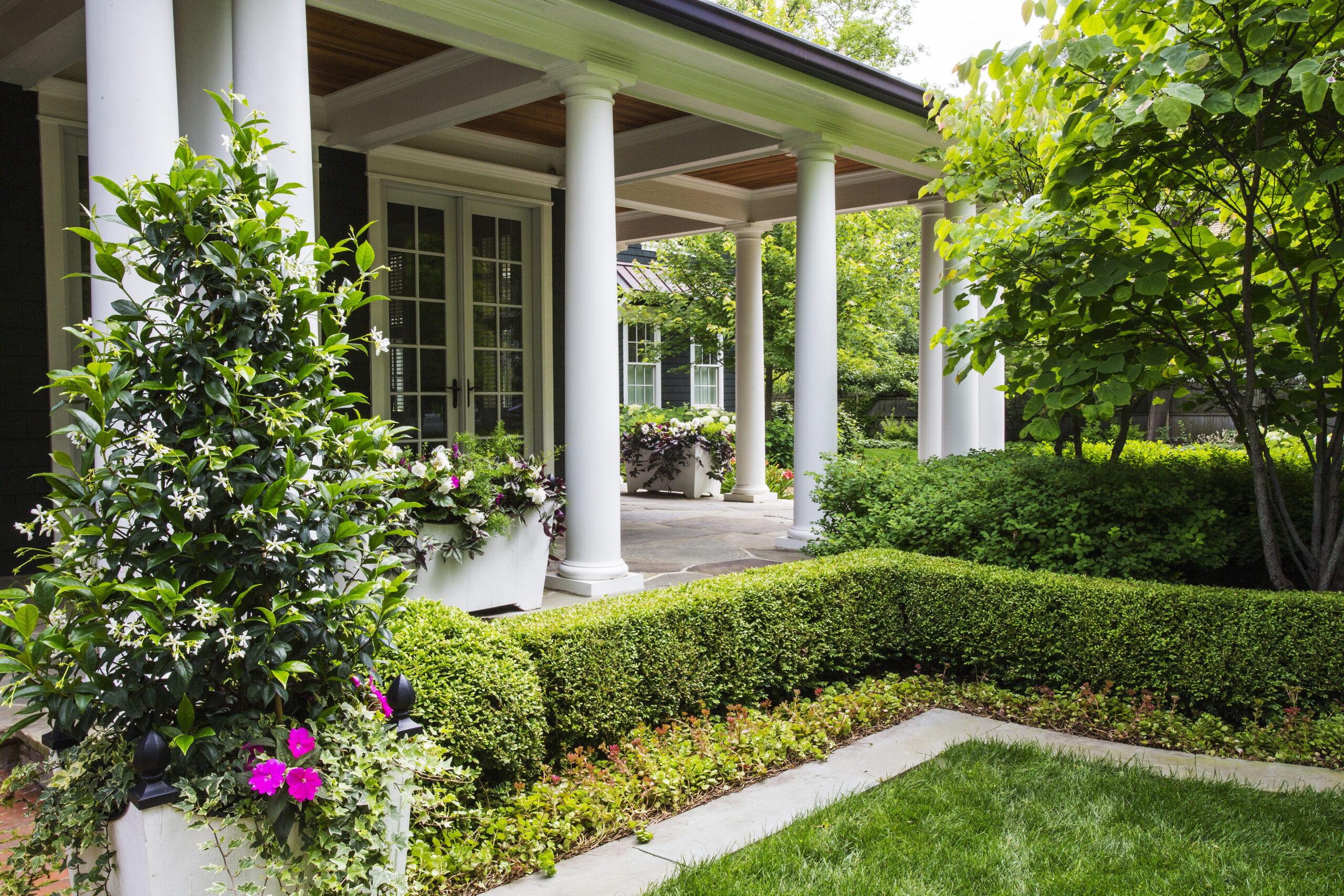
High-end residential landscape maintenance is not weekly mowing and seasonal cleanups. It is a structured system of observation, horticultural science, and long-range planning designed for estates and architecturally significant properties.
Routine maintenance is easy and produces fine short-term results. Long-term planning based on horticultural expertise and responsible stewardship is rare and requires more investment, but the differences reveal themselves over time:
- Ivy kept away from wood window frames, preserving historic fixtures
- Interior tree branches pruned based on their maturity and function (are they privacy screens or shade providers?)
- Carefully planned planting of perennials and annuals for a refined plant palette every season that leaves guests awe-struck
- Soil health and grading are monitored and adjusted to prevent future flooding
- Irrigation systems that are constantly tested and adjusted to provide even, accurate watering for lush lawns that are the envy of the neighborhood
These are not cosmetic details. They are systems for long-term landscape health that preserve the investment you’ve made in your property.
High-end residential landscape maintenance can be viewed as a long-term partnership that is invested in your property as you are. It respects scale. It anticipates growth. It guards against decline before symptoms appear.
In estate landscape maintenance services, the focus shifts from “What needs trimming today?” to “How will this property perform in ten years?”
At Mariani Landscapes, we view our role as stewards of your investments, tending to them so that they stay healthy as they mature.
Our property maintenance packages include:
- A dedicated Mariani Client Representative who understands your property history.
- Multiple detail-oriented experts with trained eyes on your property.
- Access to plant material that exceeds what most competitors can obtain.
- A care strategy centered on your vision, not a template.
This is landscape management services at an estate level. Our values are guided by a culture shaped by decades of leadership and high expectations.
When landscape maintenance is done properly, you gain confidence. Your landscape matures gracefully instead of unpredictably.
How Do You Move Beyond Routine Landscaping Toward Estate Stewardship?
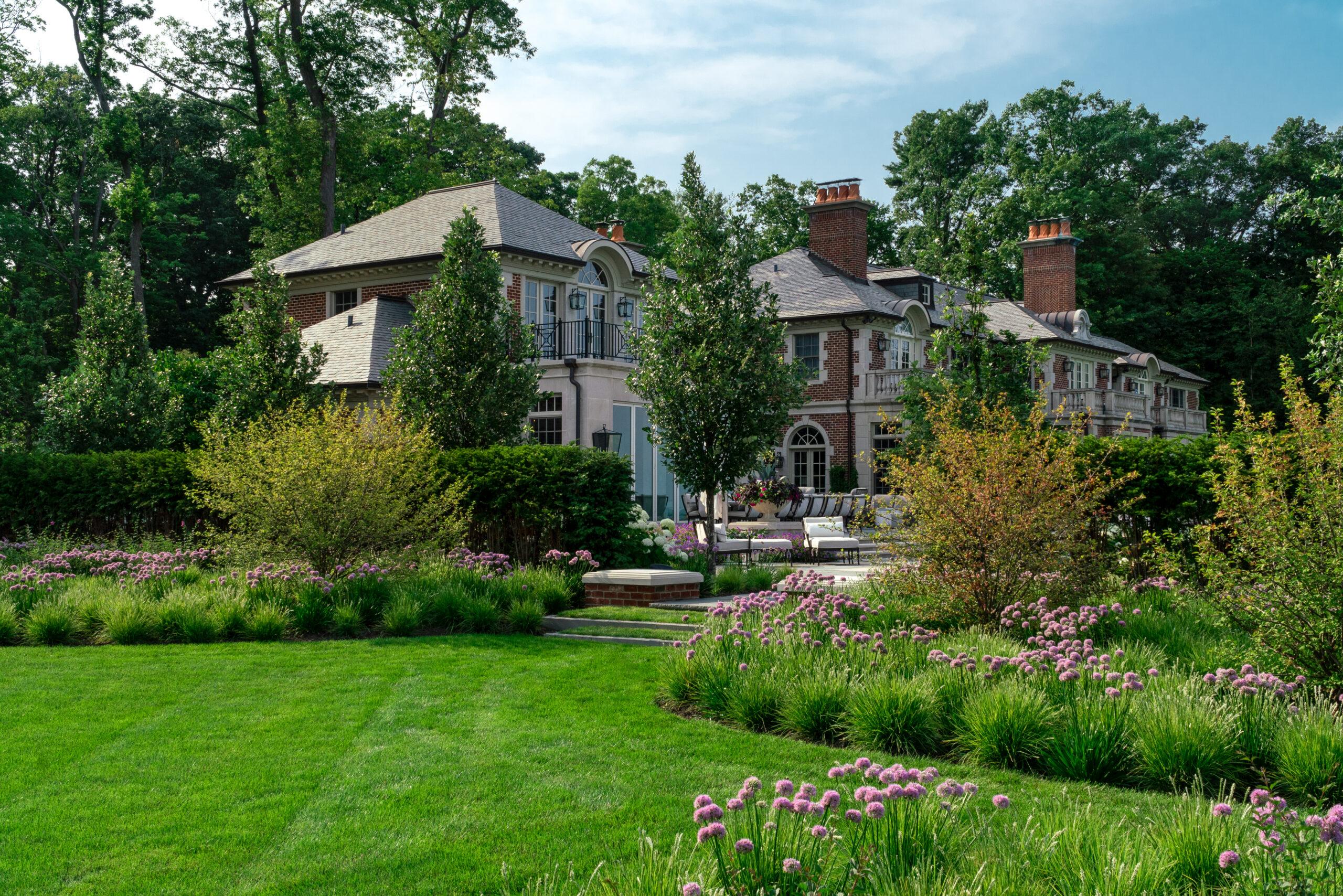
Routine maintenance focuses on short-term appearance. Estate stewardship protects long-term value. If your property is significant in scale, architecture, or history, surface-level care is not enough. You need structure, foresight, and accountability. This is where high-end residential landscape maintenance separates itself from standard service.
At the estate level, maintenance begins with evaluation. Every tree, shrub mass, perennial bed, lawn panel, and hardscape surface is assessed for both current condition and future impact. Growth patterns are studied. Soil health is measured. Drainage is observed over time. You are not simply maintaining what exists today. You are guiding what your landscape will become over the next decade.
Professional estate landscape maintenance services operate with a proactive mindset. Rather than reacting to signs of decline, adjustments are made early.
Comprehensive Property Assessment
Effective high-end residential landscape maintenance starts with understanding the full ecosystem of your estate. This includes soil composition, irrigation performance, plant health, and structural relationships between roots and architecture.
That means a holistic approach that brings in the experience of specialist arborists, horticulturists, and field supervisors to evaluate:
- Canopy density and light penetration
- Root development near foundations
- Drainage flow and soil compaction
- Shrub density and long-term screening performance
This layered oversight ensures that small issues are addressed before they become structural concerns.
Structured Seasonal Planning
A documented year-round landscape maintenance plan provides the blueprint for protecting your long-term investment. Instead of reactive scheduling, your estate receives season-specific attention aligned with plant biology.
- Spring focuses on soil conditioning, structural pruning, and early pest monitoring.
- Summer emphasizes irrigation calibration, canopy thinning, and plant stress management.
- Fall strengthens root systems and prepares trees and shrubs for dormancy.
- Winter allows for structural pruning and strategic planning.
With this disciplined approach, high-end residential landscape maintenance prevents deferred care and protects long-term plant health.
When your landscape is treated as an evolving estate rather than a weekly task, stewardship replaces routine service. Through coordinated estate landscape maintenance and experienced residential landscape management services, your property retains its functional and design intentions year after year.
What Is The Right Approach To Historic Home Landscape Preservation?
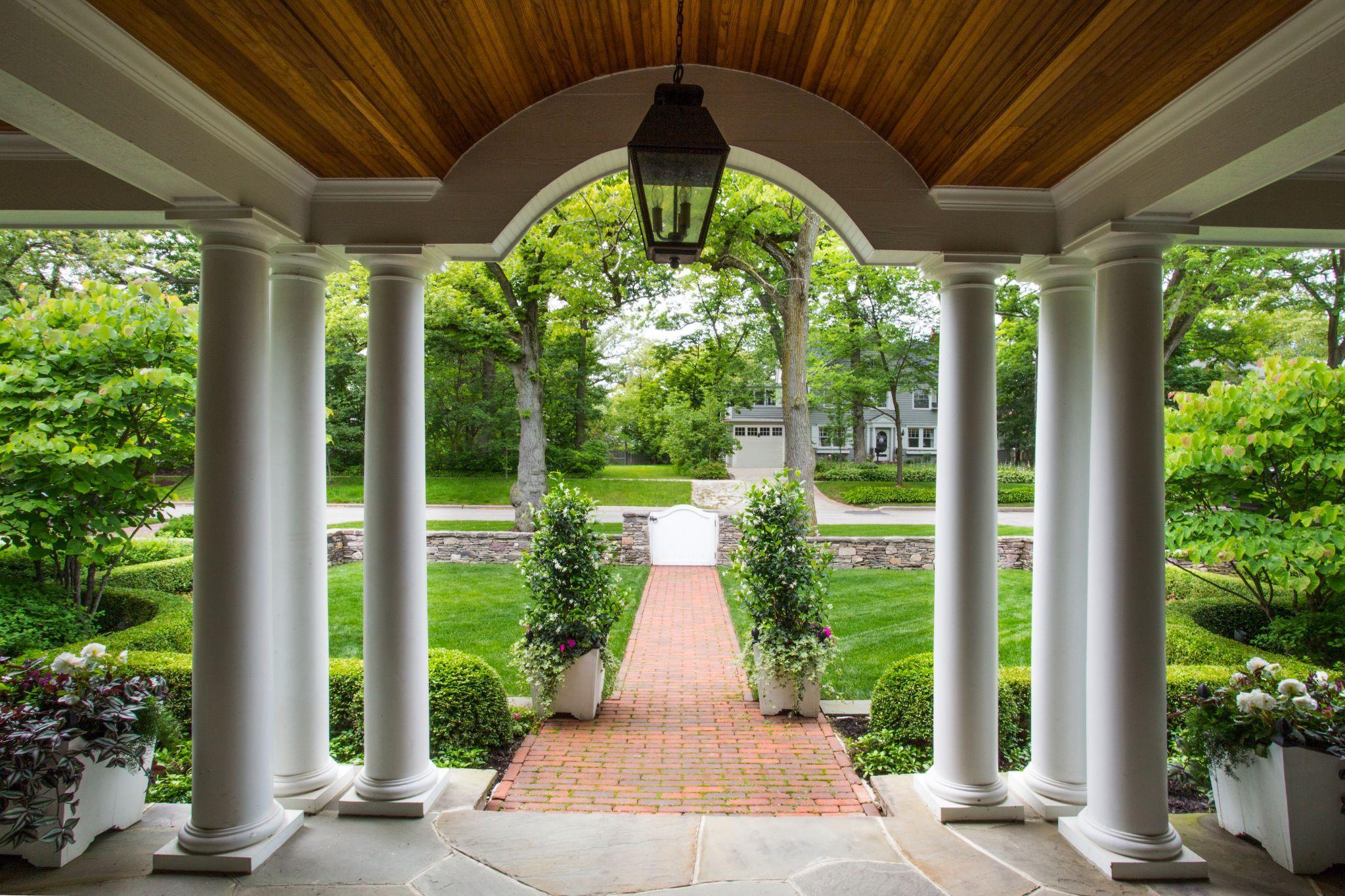
Historic properties require deep care, respect, and specialist knowledge. Architectural detailing, original masonry, and legacy plantings carry history that cannot be replicated. In these settings, high-end residential landscape maintenance must balance preservation with thoughtful evolution. Every pruning cut, plant replacement, and soil adjustment should support long-term vitality while reinforcing the home’s original character. The goal is not to modernize for the sake of change, but to sustain original features across generations.
Historic home landscape preservation begins with careful research and evaluation. Archival drawings and photographs help clarify the original layout and planting intent. Mature tree stability is assessed to protect both safety and historic scale. Foundations, stonework, terraces, and aging drainage systems, often installed decades earlier, must be examined to confirm they still function properly. Within structured estate care, infrastructure is considered alongside horticulture so that plant health does not compromise structural longevity.
Proactive mature tree care for estates becomes especially important near historic facades. Expanding root systems can shift masonry over time if left unmanaged. Strategic structural pruning reduces canopy weight and wind resistance while maintaining shape and appeal. Ivy is carefully managed to prevent moisture retention against wood frames. Root zones are protected during renovations, and soil is preserved to sustain long-term plant health.
In addition, plant selection in historic settings requires discretion. Replacement species must reflect the scale, texture, and character of original plantings while offering improved resilience. Subtle adjustments to shrub density can improve airflow without altering established form. Seasonal care is timed to respect bloom cycles and structural dormancy. Through disciplined high-end residential landscape maintenance, legacy landscapes remain authentic, resilient, and architecturally aligned while continuing to perform reliably in a modern climate.
Explore our Fall 2025 Folio for an exploration of our work preserving the extraordinary grounds of a Frank Lloyd Wright property.
How Do Season-Specific Horticultural Programs Protect Your Estate?
Estate landscapes do not respond well to generic schedules or rotating crews that follow the same checklist at every property. Soil composition varies. Microclimates shift across the grounds. Plant palettes differ from one estate to another. That is why high-end residential landscape maintenance relies on season-specific programs tailored to your property’s unique conditions. A structured approach provides clarity, consistency, and accountability throughout the year. Instead of reacting to visible stress, your landscaping schedule is guided by foresight. A well-developed luxury home landscape maintenance guide outlines what occurs monthly, not just seasonally, ensuring that no phase of growth is overlooked.
That being said, seasonal preparation should encompass the following:
Spring Renewal And Structural Preparation
Spring sets the tone for the year. Soil is conditioned and replenished. Structural pruning improves airflow and shape. Early pest monitoring begins before infestations spread. Irrigation systems are switched on and tested once temperatures are consistently above freezing. Through proactive estate landscape maintenance services, emerging growth is directed rather than left unmanaged. This early attention strengthens plant resilience heading into warmer months.
Summer Stress Management And Monitoring
Summer demands vigilance. Irrigation systems are calibrated to respond to heat and rainfall patterns. Canopies are evaluated for density. Mature tree care for estates often includes selective thinning to improve airflow and reduce storm risk, and any storm impact is attended to. With attentive high-end residential landscape maintenance, heat waves and heavy rain are anticipated, not reacted to.
Fall Root Development And Soil Health
Fall is not simply cleanup season. It is a critical period for strengthening root systems. Soil amendments are applied strategically. Perennials are evaluated for division or relocation. A documented year-round landscape maintenance plan captures observations that guide adjustments for the following year.
Winter Protection And Long-Term Planning
The dormancy of winter presents excellent opportunities for long-term maintenance. Without foliage, trees reveal their structure. Pruning trees while they are dormant during winter supports healthier healing and less chance of disease, while late winter pruning can be a great opportunity to get ahead of the work of spring. With the coming freeze, irrigation systems are closed down to protect their long-term function and prevent flooding. Through disciplined high-end residential landscape maintenance, timing protects long-term vitality and ensures your estate performs consistently year after year.
Why Does Engaging Landscape Design Experts Matter In Ongoing Care?
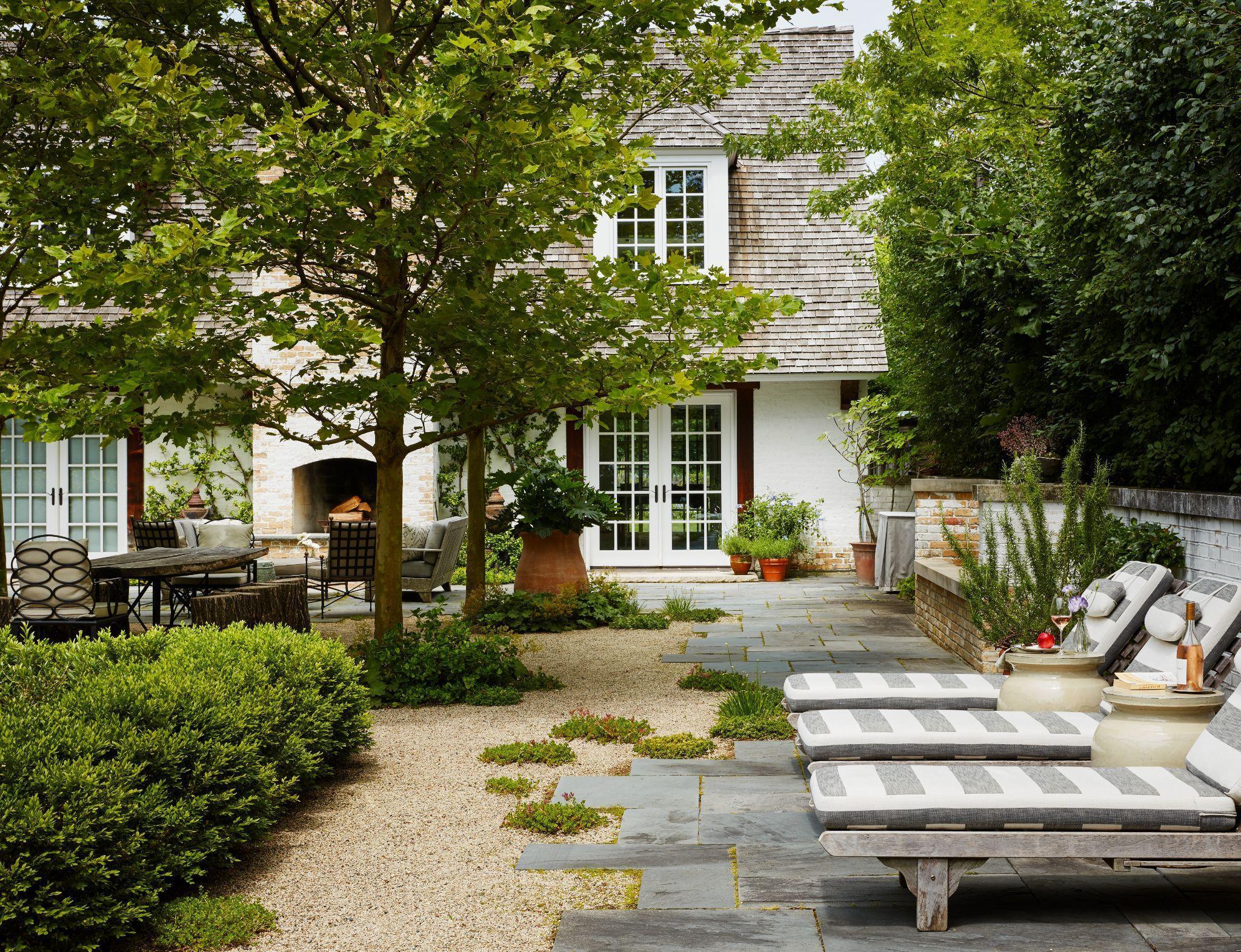
Even the most carefully built estate can gradually lose clarity without design oversight. Plants grow beyond their intended scale. Sightlines narrow as canopies thicken, and the increased wind resistance of extra branches and foliage increases the risk of storm damage. Carefully planned layering becomes uneven. Focal points lose definition. Over time, subtle changes compound. And when upgrades are desired, there is a risk that regenerated areas no longer match the overall plan or aesthetic.
This is why high-end residential landscape maintenance must include design professionals who monitor proportion, balance, and plant performance with consideration for the property as a whole. When design review is integrated into estate landscape maintenance services, adjustments happen early, preserving architectural intent and visual harmony.
Design experts help by providing:
- Annual Design Audits: As part of ongoing high-end residential landscape maintenance, annual walk-throughs evaluate scale, symmetry, and spatial relationships. These reviews identify gradual drift before it becomes visually disruptive.
- Proportion Adjustments: Trees and shrubs naturally expand. With experienced guidance, selective pruning and canopy shaping restore balance between plant material and architecture. This level of refinement is central to effective estate landscape maintenance services.
- Replacement Planning: Plant material has a lifecycle. Integrated planning ensures aging specimens are replaced strategically rather than abruptly. Within comprehensive landscape services, replacements are phased to maintain continuity.
- Plant Upgrades From Superior Sources: When upgrades are necessary, access to high-quality nursery stock preserves maturity and scale. This reinforces the standards of high-end landscape maintenance.
For significant properties, including those requiring historic home landscape preservation, design oversight honors original intent while allowing thoughtful evolution. With continued expert involvement, high-end residential landscape maintenance protects architectural clarity and maintains cohesion across decades.
Why Is Plant Material Selection So Important In Estate Settings?
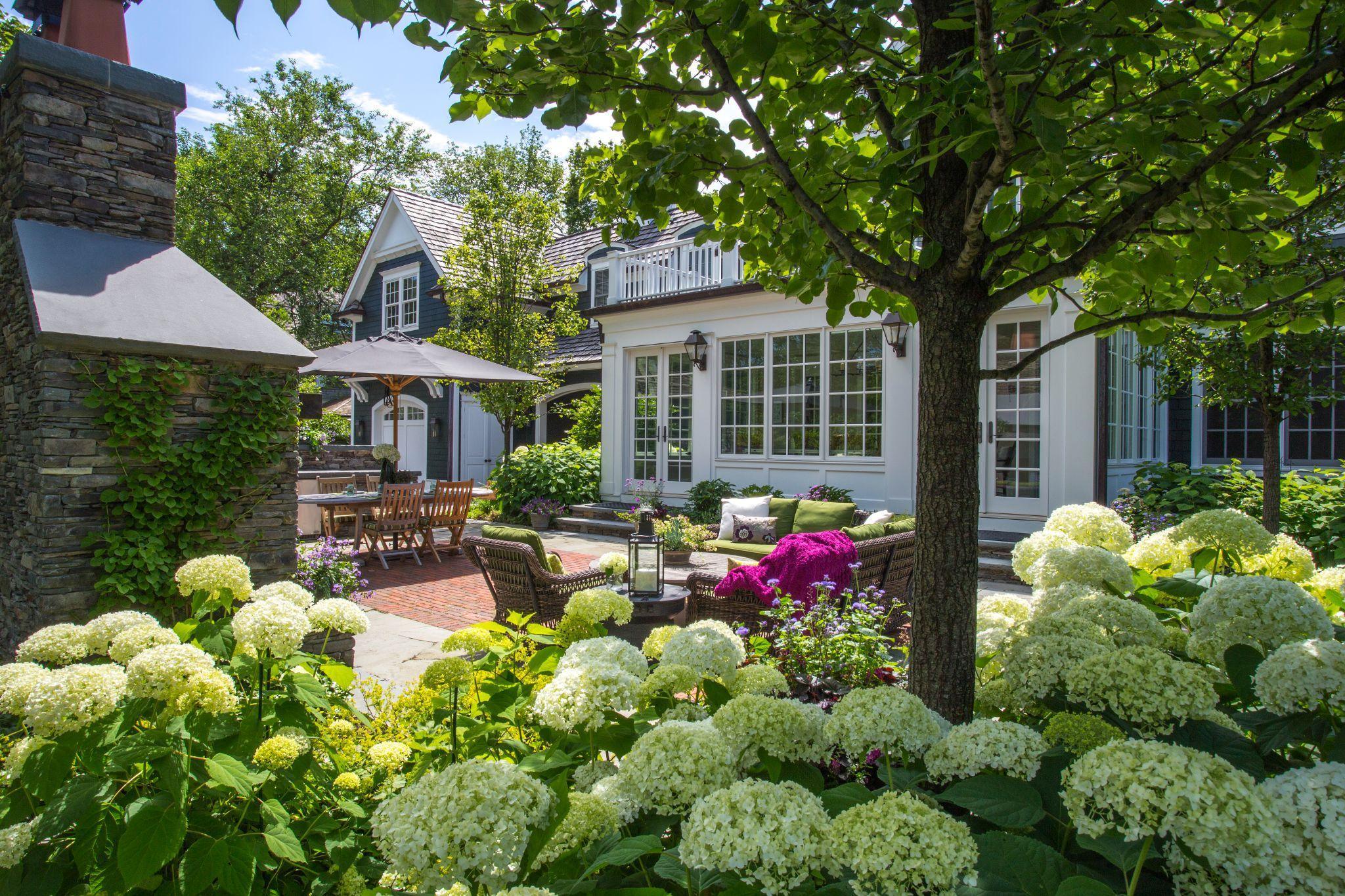
Plant material defines longevity. The trees and shrubs installed on your estate today will shape scale, shade, and structure for decades. For that reason, high-end residential landscape maintenance begins with thoughtful selection, not convenience. The quality, maturity, and genetic strength of plant material directly influence long-term performance.
Access to superior specimens makes a measurable difference. Larger caliper trees, well-developed root systems, and specialty cultivars provide stability and visual presence from the outset. Within disciplined estate landscape maintenance services, selection standards focus on long-term viability rather than short-term availability.
Careful evaluation includes:
- Disease resistance suited to regional pests
- Selecting for maturity based on property architecture and surrounding canopy
- Root structures capable of supporting long-term growth
- Climate adaptability based on soil and exposure conditions
Experienced landscape maintenance partners should clearly define expectations for material sourcing and long-term performance standards. This approach ensures that each installation supports the overall look and feel of your property and plans for plant maturation over time. Mature tree care for estates begins with choosing trees capable of thriving for generations rather than acting as a seasonal update that quickly withers.
In properties requiring historic home landscape preservation, sourcing compatible species protects the original architectural vision. Through intentional planning and disciplined oversight, high-end residential landscape maintenance treats plant material as long-term infrastructure; living elements that anchor and sustain the estate’s appeal over time.
How Should You Plan For 30–50 Year Tree Maturity?
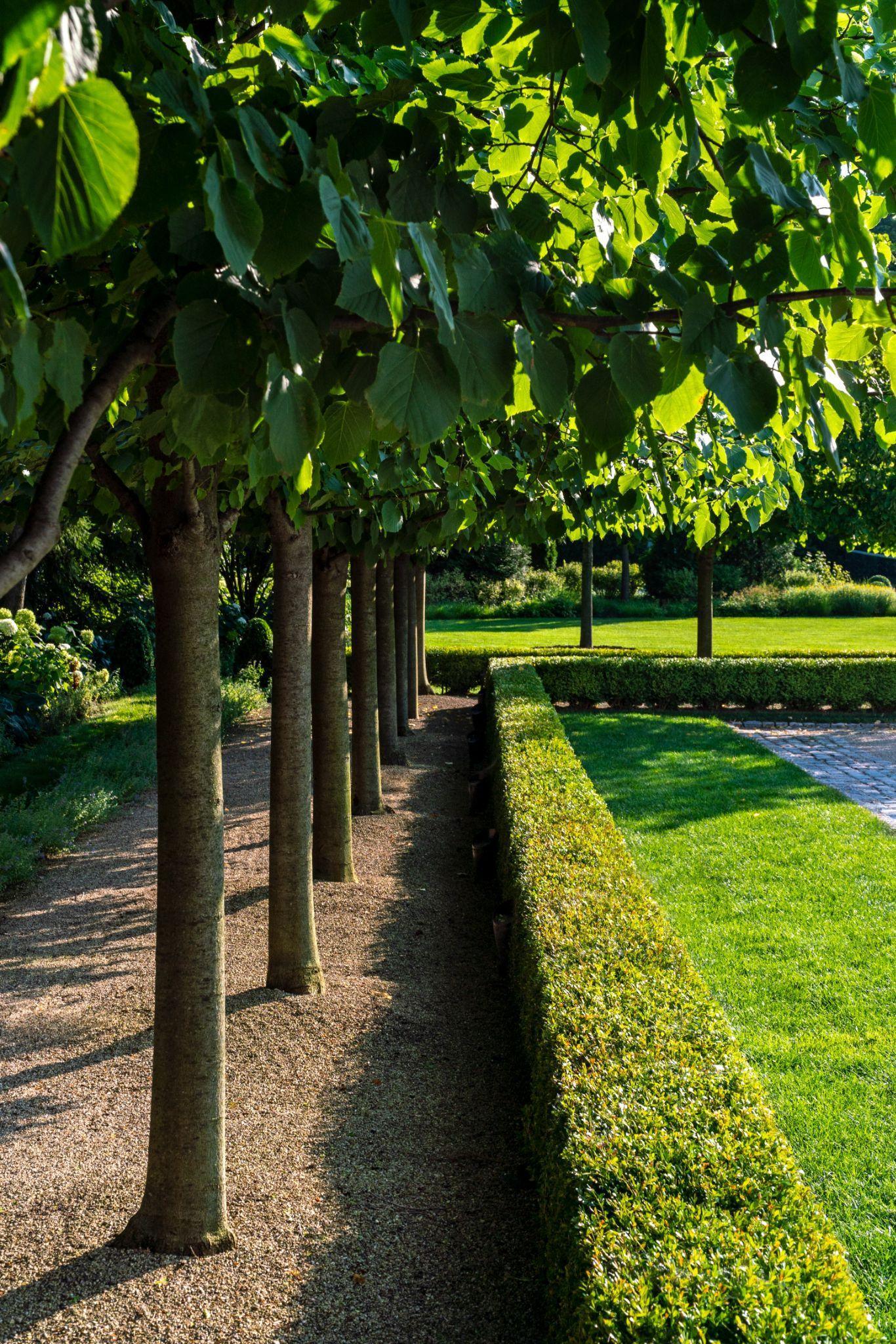
Trees are the most permanent living elements on your estate. Lawns can be renovated. Shrubs can be replaced. Perennials can be divided. Mature trees, however, define scale, shade, and structure for generations. Their canopies frame architecture. Their roots influence soil stability. Their growth patterns shape how you experience your outdoor spaces over time. This is why high-end residential landscape maintenance must include long-term canopy planning and structural evaluation from the earliest stages of growth.
Without a forward-looking strategy, trees can outgrow their surroundings. Branches extend too close to roofing and chimneys. Root systems push against foundations and hardscapes. Dense canopies block light intended for understory plantings. These challenges rarely appear overnight. They develop gradually, which is why consistent oversight is essential.
Planning For Ultimate Size And Scale
When evaluating trees within estate landscape maintenance services, long-term size matters as much as current appearance. A tree that looks appropriately scaled today may double in spread over the next two decades.
A professional horticulturalist will consider:
- Ultimate height and canopy spread at maturity
- Relationship to rooflines and architectural symmetry
- Clearance over driveways and pedestrian paths
- Visual balance across the entire property
These aspects should be evaluated before any landscape design updates and revisited annually to monitor progress.
Managing Root Zones And Structural Impact
Roots are often overlooked because they are unseen. Yet root expansion influences drainage, hardscape stability, and foundation integrity. Professional residential landscape management services carefully assess root zones, especially near historic or architecturally significant structures.
Key considerations include:
- Root proximity to basements, retaining walls, and property lines (to prevent future disputes)
- Soil compaction within high-traffic areas
- Competition between trees and surrounding shrubs
- Impacts on soil health (e.g., the high soil acidity caused by pine needles)
- Long-term irrigation impact on root health
Long-term planning prevents major and costly root issues in the future.
Structural Pruning And Early Intervention
Proactive mature tree care for estates begins long before trees reach full height.
An expert-led approach includes:
- Early structural pruning on younger trees to establish strong branch architecture and reduce the likelihood of future storm damage
- Planned pruning during dormant winter periods to reduce damage and disease
- Regular monitoring to track canopy density, wind resistance, and branch strength. Adjustments are gradual and intentional, protecting both health and form.
A documented year-round landscape maintenance plan captures these observations. Over time, patterns become clear. Growth rates are recorded. Stress responses are noted. This documentation supports informed decision-making rather than reactive pruning decades later, by which point it may be too late to prevent damage to the tree or your property.
Why Is A Long-Term Partnership The Most Effective Strategy?
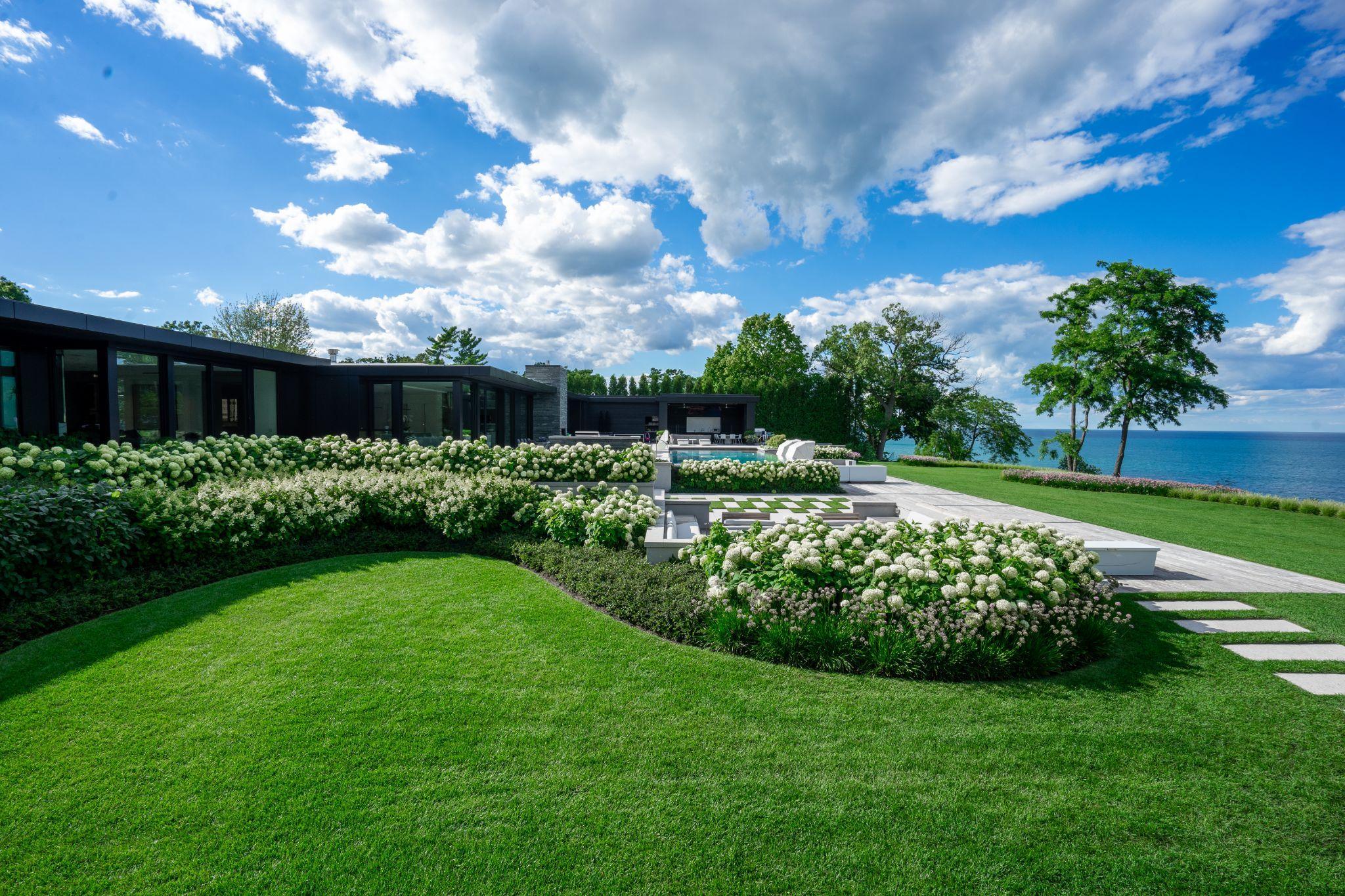
Estate care cannot be episodic. Significant properties evolve gradually, and landscapes respond best to continuity rather than interruption. When service providers rotate or operate without historical knowledge, subtle patterns are missed. Soil conditions shift. Canopy density increases. Drainage performance fluctuates. Without long-term familiarity, these changes often go unnoticed until correction becomes disruptive. This is why high-end residential landscape maintenance is more effective with an established partnership guided by consistency and accountability.
At Mariani Landscape, continuity is intentional. Every client is supported by a dedicated Mariani Client Representative who understands property history, architectural priorities, and long-range goals. That single point of contact ensures clarity, while a broader network of specialists, including horticulturists, arborists, irrigation experts, and design professionals, keeps trained eyes on the estate year-round, with plans that factor in decades, not just seasons.
Over time, that consistency increases precision. Detailed records support refined seasonal adjustments. Patterns in plant performance, canopy growth, and soil health are tracked and evaluated to improve oversight accuracy. The longer the relationship, the more informed the guidance.
The culture behind this approach traces back decades to founder Frank Mariani, whose standards continue to influence the company. High expectations, diligence, and respect for architectural integrity remain central. Routine maintenance is easy. Meticulous property care is rare. At Mariani Landscape, high-end residential landscape maintenance is approached as stewardship rather than task completion.
Plant material sourcing also reflects this long-term philosophy. Access to exceptional nursery stock allows estates to maintain scale and maturity that exceed industry norms. Client needs remain central. The vision guiding each decision aligns with the homeowner’s priorities, not a preset template.
For estates that require structure, accountability, and horticultural foresight, a long-term relationship with Mariani Landscape ensures that property care protects maturity, safety, and architectural balance year after year.
When you seek thoughtful stewardship rather than routine service, Mariani Landscape provides high-end residential landscape maintenance designed for enduring value. To begin a conversation about protecting your estate for decades ahead, contact us today.
Summary
High-end residential landscape maintenance is a structured, horticulture-driven approach that protects the long-term health, safety, and architectural integrity of estate properties. Rather than relying on routine service, this level of care focuses on proactive planning, detailed oversight, and disciplined execution. Through coordinated estate landscape maintenance services, plant maturity is carefully managed, canopy growth is consistently monitored, and seasonal adjustments are made with precision. The result is a landscape that evolves with strength and stability instead of decline or imbalance. For significant homes that require more than surface-level upkeep, professional landscape maintenance ensures your property remains refined, resilient, and aligned with its original architectural intent for decades to come.