Owning a historic or distinctive property comes with expectations, especially if you host regularly throughout the year. Landscaping plays a significant role in creating that all important first impression: it frames your architecture, reflects your lifestyle and standards, and evolves season by season, year after year. Landscapes are also delicate ecosystems, responding to climate, use patterns, and unseen elements such as soil health, grading, and irrigation systems. Everything has to work together to produce that first impression.
Over time, mature trees expand, shrubs thicken, and soil conditions shift. Small imbalances left unaddressed can become visible signs of decline. Historic features can become obscured or even damaged by creeping ivy or fallen branches. What once felt intentional may begin to feel uncoordinated.
Working with landscapers who understand what it means to protect long-term value can be the difference between preserving your investment and making regular, costly repairs that impact curb appeal.
If you’re considering how long-term plant care protects your investment, we put together this guide to address frequently asked questions (FAQs) from luxury or historical property owners, explaining how careful stewardship of your plant material protects your investment and supports lasting beauty.
What Does Luxury Estate Plant Care Include?

Luxury estate plant and garden care focuses on long-term health, structure, and visual balance across your entire property. It goes beyond weekly lawn mowing and seasonal upkeep.
You receive a coordinated plan that considers:
- Tree canopy development that treats each tree species uniquely, adjusting as trees mature
- Shrub structure and density monitoring and adjustments that protect visual appeal and garden bed airflow
- Perennial vitality that ensures your plant palette emerges in a predictable, healthy way each year
- Soil health, providing seasonal fertilization and mulching where required and monitoring for pests
- Drainage and irrigation monitoring, reducing the change of flooding or inconsistent watering
- Historic context that works to preserve the original design intention of the property
This level of care often includes estate horticulture services tailored to large, layered landscapes. Your plantings are evaluated not only for appearance, but for how they will mature over time.
Estate property care should feel like a partnership, not a service. At Mariani Landscape, every client receives a dedicated Client Representative who acts as a liaison with our team of horticultural experts, who, together with qualified landscape designers, regularly review plant health and performance.
Luxury plant care supports stability, consistency, and measured growth. For a deeper understanding of how these principles apply to your property, visit our Plant Care services for further guidance on long-term landscape stewardship and estate-level horticultural care.
How Is Softscape Maintenance Different From General Landscaping?
General landscaping often focuses on mowing, trimming, and routine seasonal work. A team arrives, does its work, and leaves. It is often a one-size-fits-all service that doesn’t account for unique properties and plant material, especially unusual or exotic specimens. While this approach keeps up appearances for the season, it can fall short for long-term preservation and property investment.
Softscape maintenance for estates requires a deeper understanding of the role plantings play in the overall design intention, and how this changes over time as plants mature and needs change. For historical properties, it is especially important to monitor plant material through a long-term lens, staying ahead of branch and root development to prevent costly damage.
Softscape maintenance for estates addresses:
- How plant palettes impact the overall impression of the property and preserve design intent
- Tree maturity over time and planning for how trees will fit in the design over decades, not just this season
- Planning for seasons in a way that feels both continuous yet timely for regular hosting
- Root zone protection that addresses issues before they cause structural damage
- Layered privacy screenings that create a sense of tranquillity while maintaining a seamless, overall design
Estate plant material maintenance should not simply be a seasonal chore. It is a set of practices and systems that plan outcomes over years and decades.
How Are Mature Trees Managed Over 20–50 Years?

Trees define the character of an estate. Mature tree care for luxury homes requires careful monitoring over extended timeframes.
Over 20 to 50 years, your trees may experience:
- Structural stress
- Competing canopies
- Soil compaction
- Storm damage
- Shifting sunlight patterns
Mature tree care for luxury homes involves attentive annual planning rather than reacting when issues arise:
- Maturity should be planned for, ensuring that the risk of damage is reduced by accounting for branch and root development
- Tree selection should reflect the overall design intention for the property as a whole
- Pruning is scheduled for the dormant winter phase, when the tree isn’t growing, to prevent long-term damage and disease
- Trees are regularly pruned from a young age to guide visual structure
- Canopies are guided to reduce air resistance, reducing the chance of storm damage
When properly cared for, trees become part of your estate’s identity for generations, preserving history and investment.
What Is Structural Pruning And Why Does It Matter For Estates?
Structural pruning shapes trees and shrubs early in their development. It encourages balanced branching that maximizes sun exposure, as well as maintaining visual appeal.
On estate properties, structural pruning protects:
- Architectural sightlines
- Walkways and driveways from encroachemt
- Rooflines and historic facades from potential damage
- Garden beds from too much shading
- Outdoor living spaces where sun exposure is desired, such as around outdoor pool areas
Without this attention, branches can compete, weaken, or grow unevenly. Over time, this leads to stress fractures, aesthetic imbalances, and worst of all, threats to life and property during storms.
Luxury estate plant care includes structural pruning schedules that align with growth cycles. The result is stronger trees and shrubs that age with integrity.
How Do You Maintain Dense Screening As Shrubs Mature?
Privacy screenings that use natural borders can be a tasteful option for creating a peaceful, tranquil zone away from the world. Natural privacy screens often rely on layered shrub plantings combined with tasteful perennials, which can become woody at the base or sparse in key areas as they mature.
Shrub and perennial maintenance addresses this by:
- Thinning interior growth from a young age without sacrificing privacy
- Rejuvenating older stems
- Adjusting spacing when necessary to prevent competition while maintaining visual appeal
- Introducing compatible understory plantings
- Protecting more cold-sensitive species through the winter
- Monitoring light levels as surrounding trees mature
High-end shrub and perennial maintenance keeps privacy screens full while maintaining the original design intention.
How Are Specialty Or Rare Plant Materials Sourced And Replaced?
Historic estate landscapes often include unusual cultivars or hard-to-find varieties. When replacement is necessary, sourcing requires established relationships with specialty growers. It’s likely that many local garden centers won’t stock exotic or ornamental trees.
At Mariani Landscape, our team of horticultural experts sources and stocks unique and rare plants. We provide ongoing care designed to ensure that ornamental trees and other statement plants adapt and thrive.
When replacements are made, they are carefully matched in size, scale, and growth habit to preserve historical landscaping. For additional insight into how ongoing attention maintains that consistency, contact our team for guidance on structured care and long-term planting management.
How Do You Select Plant Material For Estate Homes?

Estate plant care integrates decisions into a long-term framework that accounts for the property as a whole. Each new planting should be planned for future maturity rather than short-term effects.
This requires attention to architecture, soil quality, microclimates, and maintenance expectations that are unique to each property
The process typically includes:
- Evaluating existing mature trees
- Assessing drainage and sun patterns
- Considering historic context and preserving the original design intention
- Reviewing soil health
- Testing and optimising irrigation systems for correct watering schedules
- Planning for long-term plant health
- Considering seasonal needs and hosting requirements
Plant selection for estates is not simply following trends. It is protecting a long-term investment that captures the eye season after season.
How Do You Update Plantings While Preserving Historic Character?
Historic home landscape preservation requires care and understanding. Older estates often feature established trees and foundational plantings that define their identity.
Updates may include:
- Replacing declining shrubs with historically appropriate varieties
- Introducing perennials that align with period aesthetics
- Assessing soil health regularly to proactively prevent decline
- Adjusting layouts to accommodate modern outdoor living while preserving the original design intention
Luxury estate plant care ensures that updates complement what already exists, preserving history while embracing thoughtful change.
How Is Ivy And Climbing Plant Growth Controlled Near Historic Structures?
Climbing plants such as ivy can soften the impression of masonry and stone, adding beauty. However, unmanaged growth may trap moisture, causing damage over time or obscuring unique detailing.
Control measures include:
- Regular vine thinning
- Anchoring inspections
- Seasonal trimming
- Redirecting growth away from joints
Historic home landscape preservation often requires coordination between horticultural and masonry expertise. Ivy is managed carefully so it enhances, not damages, your property.
How Often Should Trees And Shrubs Be Professionally Evaluated?
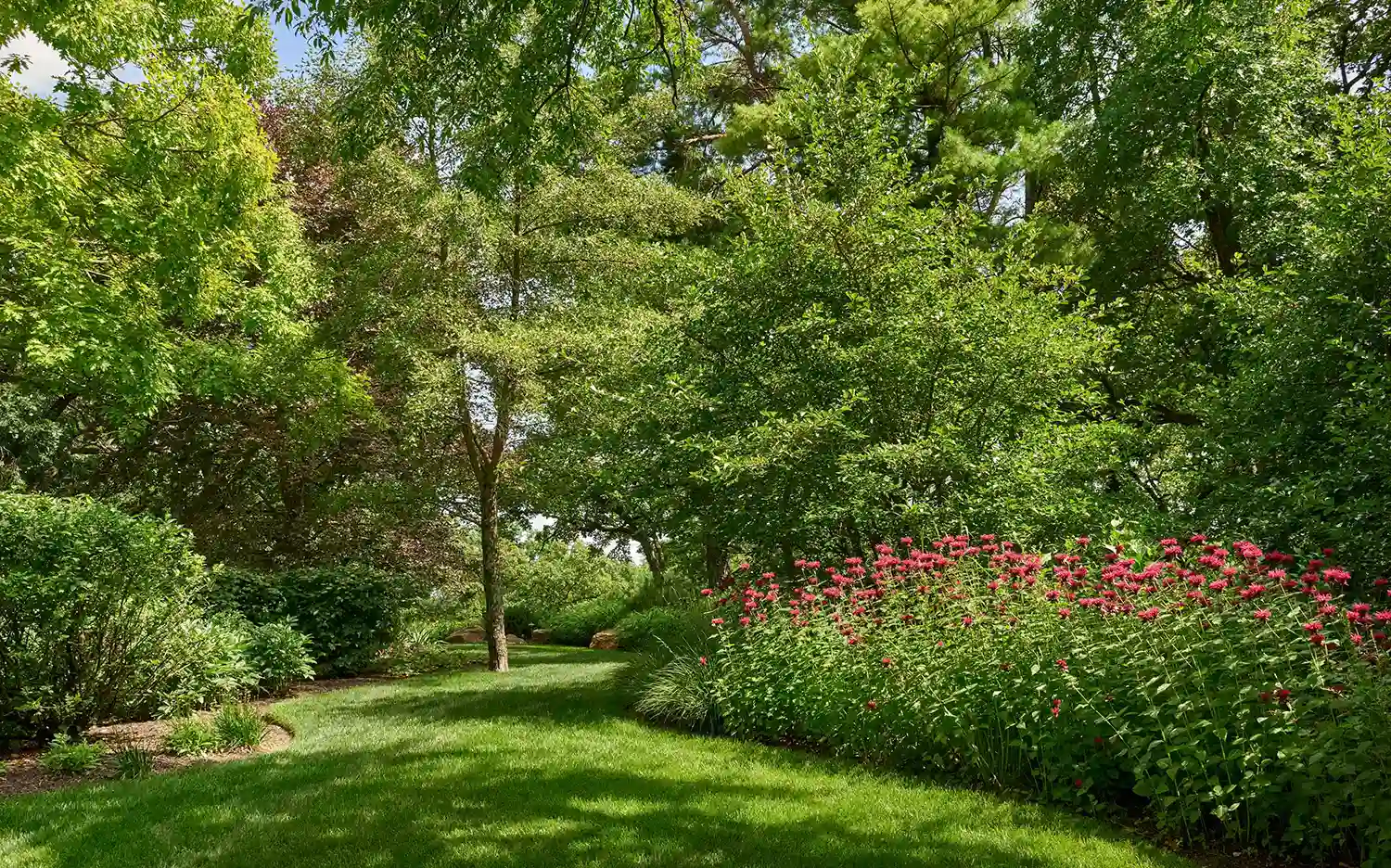
On high-value properties, annual evaluations are recommended at a minimum. Trees and shrubs can be prone to damage. Preventing storm damage requires regular care and maintenance, plus reactive adjustments if damage does occur.
During evaluations, professionals assess:
- Structural integrity
- Soil health
- Pest activity
- Drainage patterns
- Light distribution
Plant care relies on consistent monitoring. At Mariani Landscape, a dedicated Client Representative creates a comprehensive annual maintenance plan, ensuring findings are documented, communicated clearly and addressed promptly.
What Role Does Soil Health Play In Long-Term Plant Vitality?
Healthy soil supports root development, water absorption, and nutrient balance. Compacted or depleted soil weakens plants gradually.
Soil management includes:
- Aeration
- Organic amendments
- Mulch renewal
- Moisture monitoring
Horticulture services often incorporate soil testing as part of routine oversight. Adjustments are made based on measurable conditions rather than assumptions.
Luxury plant care places soil at the foundation of every planting decision.
How Are Container Gardens Managed For Proper Sun Exposure And Balance?
Large estates frequently feature container gardens near entrances, terraces, and pool areas. These plantings are a key part of creating a striking first impression and require careful planning and monitoring.
Considerations include:
- Overall plant palette and landscape design elements
- Sun exposure shifts
- Weed prevention and removal
- Regular pruning
- Irrigation consistency
- Seasonal plant changes
- Careful planning for hosting and events
Shrub and perennial maintenance principles apply to containers as well. Root space is limited, so soil and drainage must be checked regularly.
Luxury estate plant care ensures containers complement surrounding beds rather than compete visually.
Why Do Estate Landscapes Require Expert Oversight?
Estate properties are large, complex systems. Mature trees, layered shrubs, specialty plantings, and architectural features interact constantly. Historical elements may need to be preserved. Seasonal events and hosting obligations require landscaping that is always ready to leave a lasting impression.
Expert oversight provides:
- Coordinated planning
- Long-term maturity tracking
- Access to rare plant sourcing
- Clear communication through a dedicated representative
- A long-term partnership that goes beyond simple maintenance to property stewardship
At Mariani Landscape, your dedicated Client Representative serves as your primary contact, while horticultural specialists contribute insight behind the scenes. This collaborative structure reflects a culture shaped by decades of leadership and shared values.
We are here to serve your property, protecting your investment long into the future.
How Does Proactive Plant Care Prevent Decline Before It Is Visible?
Visible decline is often the last stage of a process that begins below the surface. Roots may struggle long before leaves yellow.
Proactive measures include:
- Understanding the unique topography of your property
- Regularly monitoring and documenting growth across the property to detect issues early
- Evaluating tree canopy density for optimum sun exposure for each garden bed and patch of lawn
- Replenishing soil nutrients seasonally
- Reviewing irrigation systems to ensure optimal watering
Plant care anticipates stress factors tied to weather patterns, aging trees, and expanding root systems.
This approach aligns with the broader philosophy outlined in our full guide: Landscape Maintenance for Estate Homes: Preservation Through Long-Term Stewardship.
Consistent monitoring and documentation are the best safeguards for long-term plant care.
Stewardship That Supports Lasting Beauty

Luxury estate plant care is built on long-term thinking. Property care strategies should reflect your property as a whole, accounting for history, design, and the role you play as a host in your community.
With coordinated communication and experienced horticultural professionals acting as stewards of your property, every decision is made to preserve your investment, with each season built on the last.
If you would like to discuss how thoughtful landscape stewardship can support your estate, contact our team. Our experts are here to create a plan that preserves your property for the long term.
Summary
Luxury estate plant care provides structured oversight for mature trees, shrubs, and specialty plantings on significant properties. Through softscape maintenance for estates, mature tree care for luxury homes, careful plant selection for estate homes, historic home landscape preservation, high-end shrub and perennial maintenance, and comprehensive estate horticulture services, your landscape remains healthy and balanced for decades.